

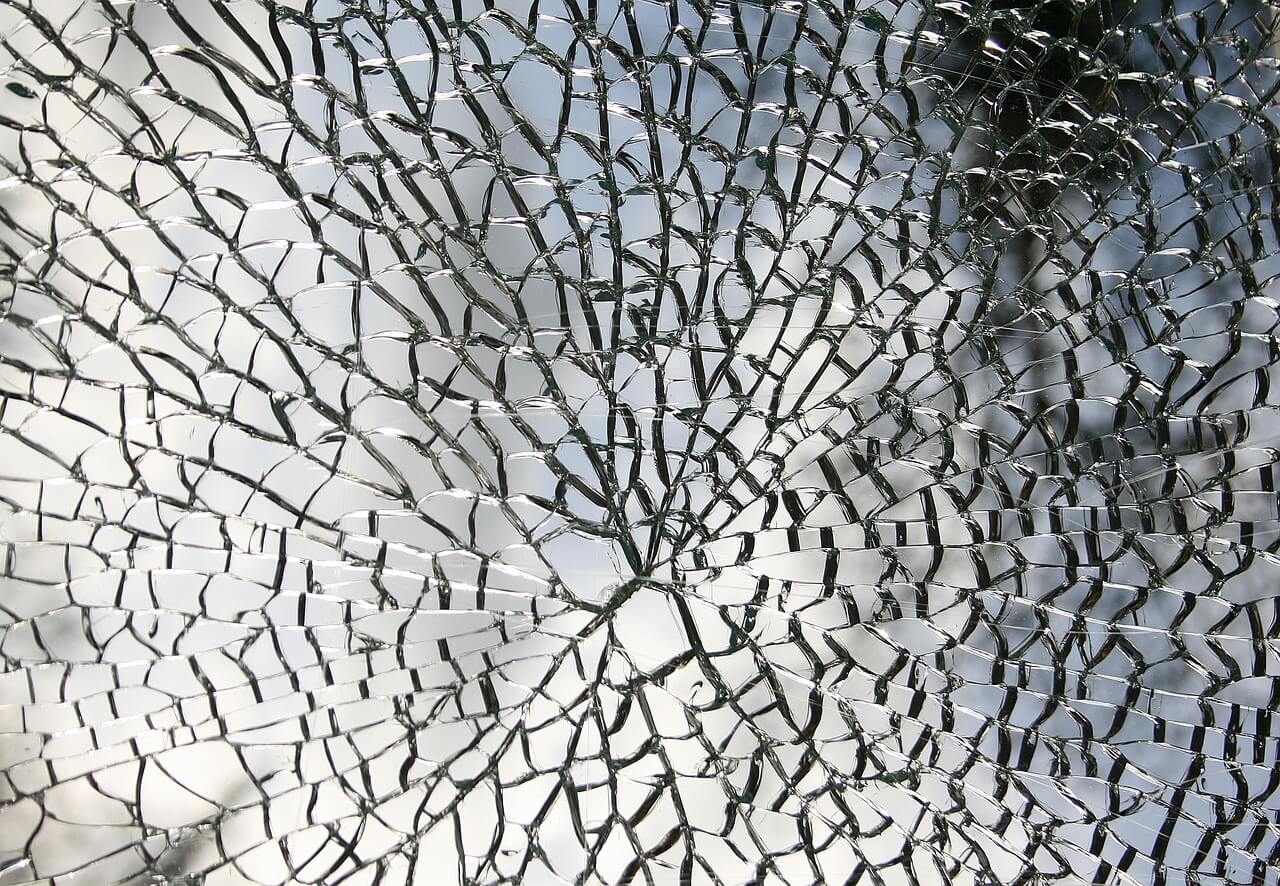

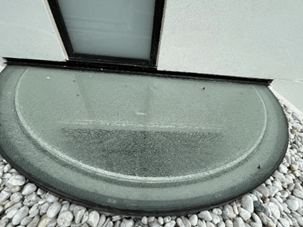
A client contacted CETEC to investigate the cause of a crack observed in a skylight located in one of Australia’s main cities. The project involved a bespoke glass skylight which shattered within the first year of service and subject of an insurance claim.
According to information provided to CETEC by the client, the glass manufacturer advised the client that the glass failed due to a chemical impurity.
CETEC was requested to test the glass and determine the presence of a chemical impurity, to confirm the manufacturer’s advice.
Project Details
Services:
Failure Investigation Material Failure
Sectors:
• Construction
Location:
Australia
Our Work
- Conducting material testing to investigate the cause of failure
- Provide a comprehensive failure analysis report
Project Highlights
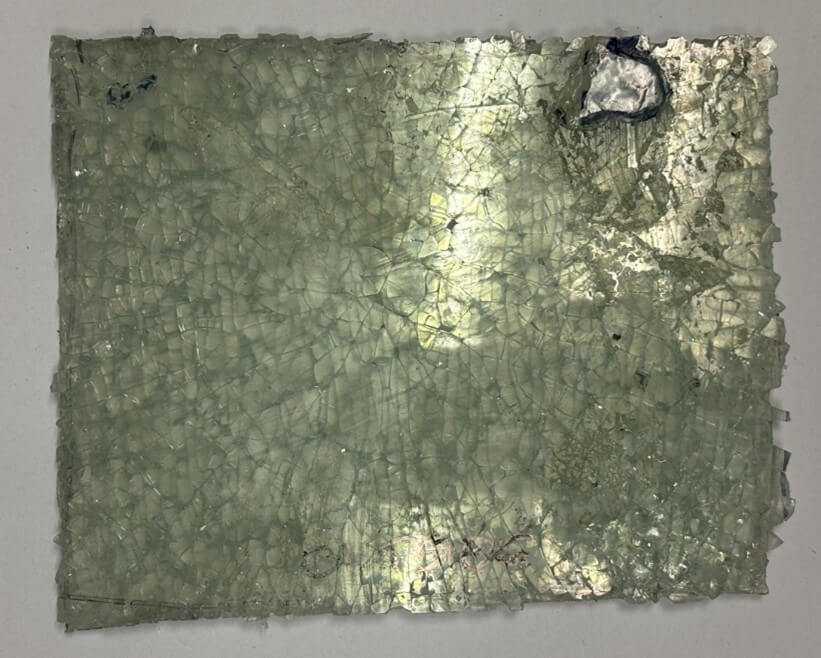
The centre of the fractured glass was initially examined under high magnification to record the features.
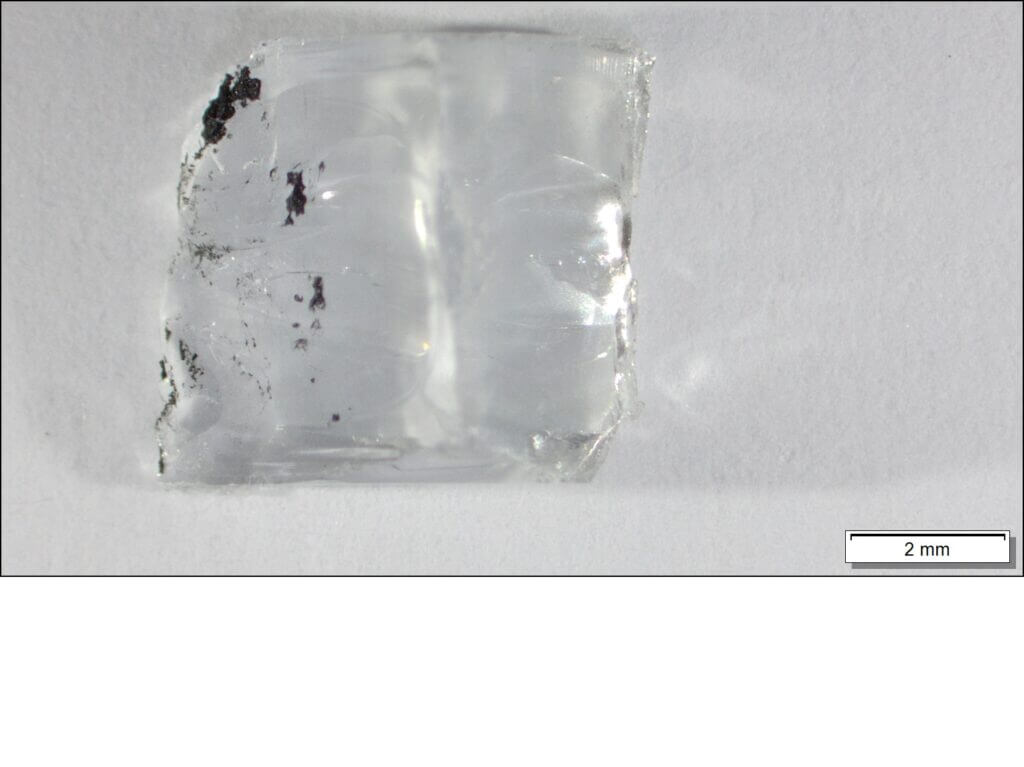
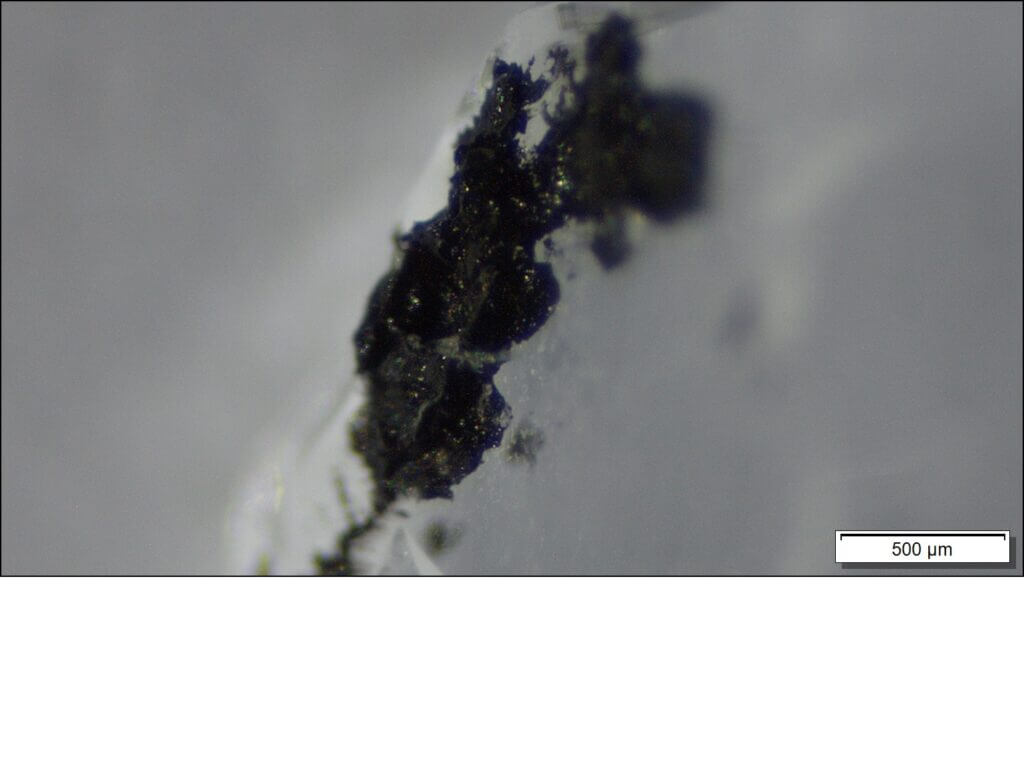
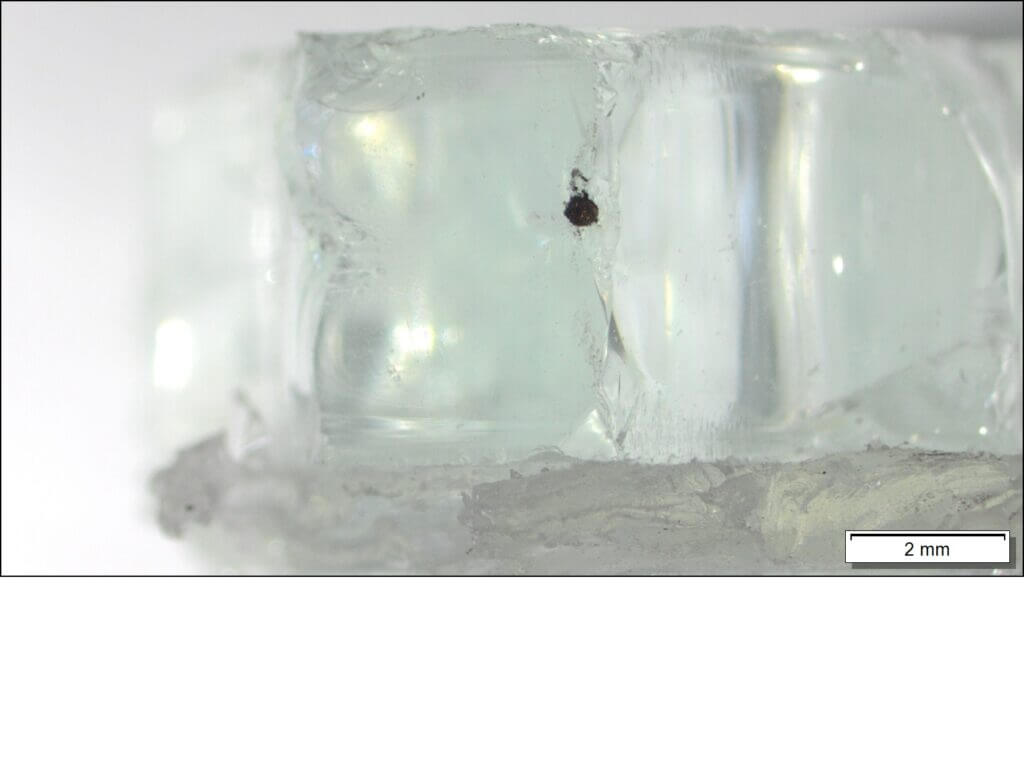
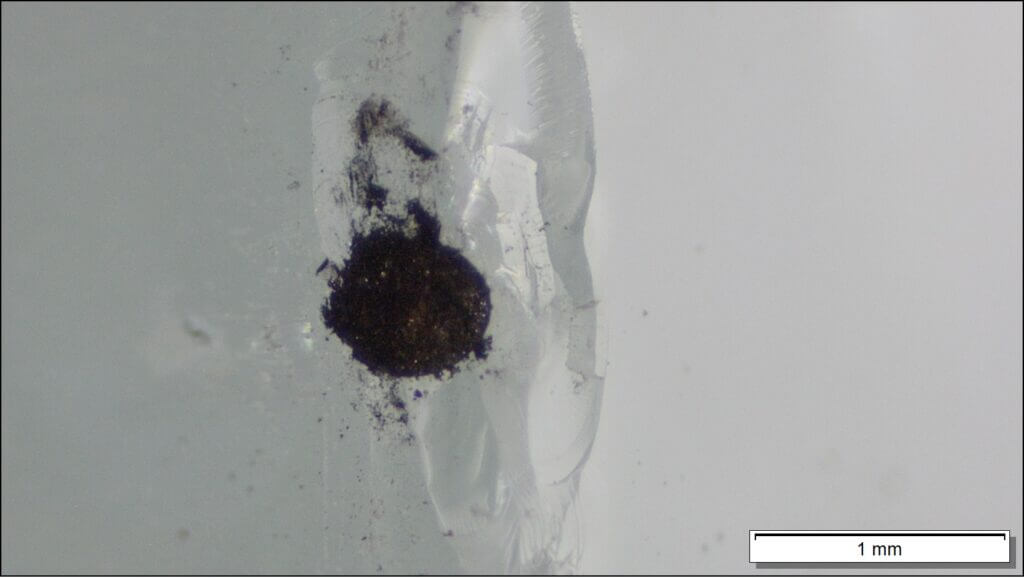
The centre of the fractured glass was examined using Scanning Electron Microscopy coupled with Energy Dispersive X-ray (SEM/EDX) Spectroscopic technique. SEM-Secondary electron (SE) images of the shattered glass peice showed an inclusion at the centre of the peice which was approximately 374 um in diameter. EDX Analysis of the inclusion revealed it to be Nickel Sulphide.
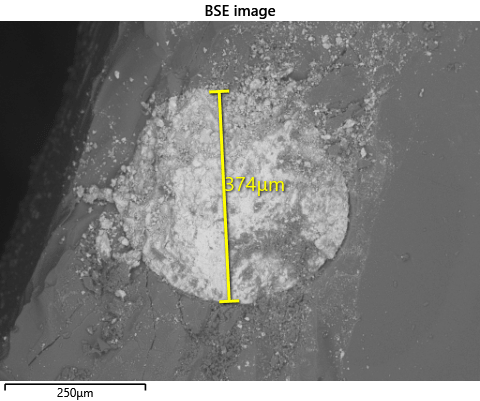
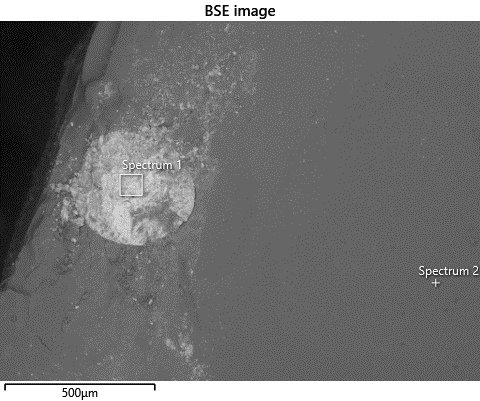
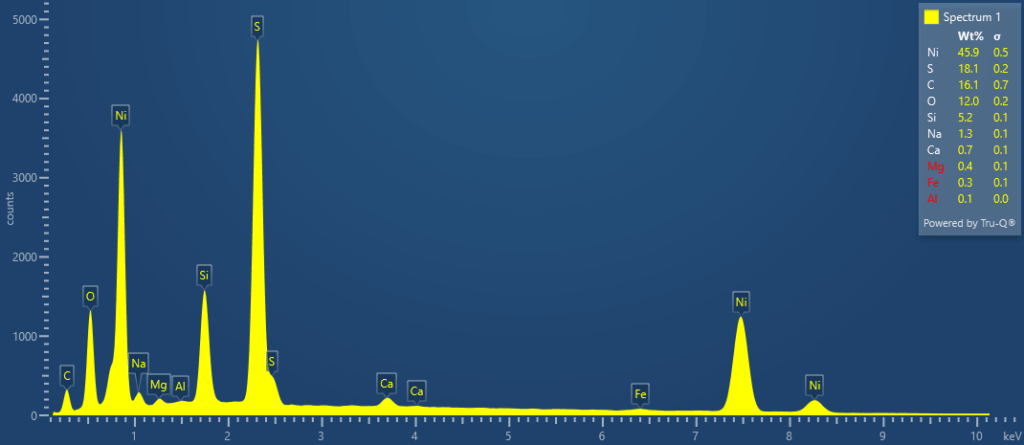
The presence of Nickel Sulphide inclusions in glass originates from contamination that takes place during the manufacturing process of the glass itself.
Nickel Sulphide (NiS) exists in phases that are accompanied by a significant volumetric expansion at higher temperatures. This expansion generates intense tensile stresses leading to a spontaneous fracture. Glass failures due to a Nickel Sulphide inclusion are characterised by a butterfly pattern.
Our Impact
- Identified the cause of the issues.
- Assisted the client to determine the cause of the fracture